Published in 1753, the Species Planatarum was the first botanical work to consistently use the binomial nomenclature – a two term naming system that helped group the natural world around us into some sort of order. This may have been seen in certain scientific quarters as a ‘dumbing down’ of the great order of things, as previously plant species and the like would have been known by long polynomial names, such as: the Plantago foliis ovato-lanceolatis pubescentibus, spica cylindrica, scapo tereti, which roughly came through a Latin grinder as a plantain with pubescent ovate-lanceolate leaves, a cylindrical spike and a terete scape. All told, a description that might come over a little heavy on the tongue post a good pub lunch.
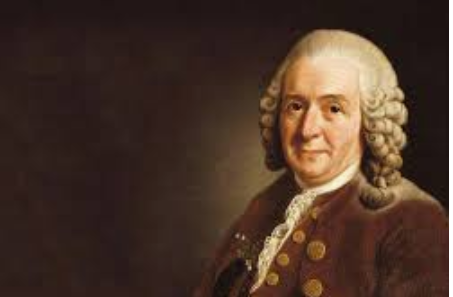
It was in the Specie Planatarum that the common onion bulb first embraced it’s posh name the Allim cepa. Who would have time to write such a book, you ask? Well, step forward and take a bow, the late great Carl Linnaeus, also known as Carl von Linne, a portly Swedish botanist, zoooligist and physician, and a man known in many a marbled corridor as the ‘father of modern taxonomy’. Never heard of him? Well, shame on you. This is one Donald Bradman of science, a prolific hoarder of stems and leaves, and a man who made the spine tingle. Indeed, Jean-Jaques Rousseau the great Genevan philosopher who shaped swathes of modern political, economic and educational thought, once murmured to a friend over brandy and thick cigars that he “knew no greater man on earth”. High praise. For Johann Wolfgan von Goethe, an uber-browed literary all-rounder and German statesman to boot, the Prince of Botanists, as Linnaeus was known, held the similar influence as Baruch Spinoza and our own great bard, the quote-tastic, William Shakespeare.
Carl Linnaeus was a Swede, and got a taste for botany from his father Nils, a Lutheran minister, who would spend many an hour pottering in the garden shed. Short of inspiration for Sunday’s sermon, Nils was wise to the benefits of a good half-hour in the garden and would even give his son a flower whenever he became upset; exposing the all too frequent clutch decision of many a modern day parent to stem a child’s tears with the help of a large bag of sherbet dip. Flowers from the garden are free, and contain a lot less sugar. Wise man. Very soon though, young Carl, had his own vegetable patch and could name every plant in the garden, in Latin. Proper form.
Linnaeus has been called the ‘Pliny of the North’ and is regarded as one one of the founders of modern ecology.
Linnaeus would later bomb at school, skipping class to gander the countryside looking for plants; but eventually fell under the caring gaze of a headmaster who, too, shared the young lad’s taste for a snip-snip of a waxy cuticle. Linnaeus would, throughout his career, be introduced to other botanists who fed his interest, giving him access to books and rare collections. And he read everything. From Palmberg’s Serta Florea Suecana to Arvidg Mansson’s timeless, Book of Herbs. Come university, his second-year thesis on plant sexual reproduction caused such a stir that the head of department decided to give him his own lecture hall and a free supply of chalk. Soon he was pulling in three-hundred students for his own lectures, which likely caused a little tension in the staff room.
As you might imagine, the classroom, only gets you so far, and Linnaeus soon hit the road. He bought a horse, some fly nets and headed to Lapland. He was supported by a grant from the Royal Society of Sciences who had, like modern-day Dragon’s Den angels, decided to back him: all in. Linnaeus headed north, right to the top of Sweden where Lapland is, in search of flowers for his box-fresh press. You might be thinking that Lapland, being so far north, is nothing more than tundra and a few inquisitive elk. And you’d be right, it’s no Amazon jungle in the biodiversity stakes, but Linnaeus still returned six month’s later with about a hundred previously unidentified plants. Showing the commercial nous of Ben Fogle, he then turned his trip into a book, Flora Lapponica; a work that was later described by the botanical historian E. L Greene to be ‘delightful’. It’s gone down as a classic, much like E. L James’ Fifty Shades trilogy, albeit in the minds of a very different end market. More trips followed and, with wind in his sails, he soon started to question the accepted system of classification. Late one night, after brooding by the fire, he decided to create one of his own.
Now taxonomy – not to be confused with taxidermy, the aristocratic practice of stuffing one’s pets and hunting trophies and sticking them in the hall – has been around a long time. Pretty much as long as mankind could communicate. There being an obvious need to know what plant would make a nice garnish, and what would kill you. Pre-18th century though this was all pretty loose and unscientific. Aristotle had a go, as you might imagine. During a stay on Lesbos one summer, he took to classifying beings by their various parts – limbs, blood, warm or cold; plants or animals. It was a good start. Come Medieval times, and there was a bit more use of abstract philosophy which didn’t seem to add a great deal, and there followed the great Age of Reason which was laced with a bit more ambition, due largely to the development of optical lenses, that enabled a closer look at everything from plant stems to Lapland moss. Andrea Cesalpino grabbed a few Sunday supplement spreads for his magnus opus De Plantis which, by all accounts was a good read, albeit a little wordy; and then came the man who had direct influence on our man Linnaeus. One Joseph Pitton de Tourefort whose 1700 best seller included reference to more than 9000 species. Top effort. It was Linnaeus though, who revolutionised taxonomy providing a next, elegant solution to the somewhat chaotic and long-winded approach of those of who came before him. With a fine eye for detail, he sliced and diced the natural world, introducing the standard of class, order, genus and species. And thus the great Linnaen system was born, a system that is still largely used to this day.
Linnaeus died in 1778 after one too many strokes, leaving a personal collection of 14,000 plants, 3,198 insects, 1564 shells and lots and lots of books. He is buried in Uppsala Cathedral and is a man who should perhaps encourage us all, to think a little bigger than we do.

 Hepburnsays